Latest News
17 August 2026
Are solar panels worth it in Ireland? A homeowner’s guide
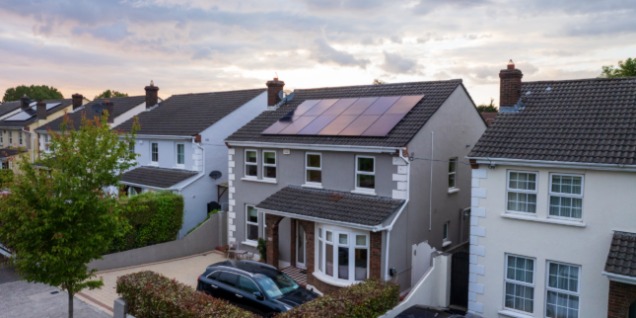
MORE THAN 155,000 HOMES ACROSS IRELAND GENERATE THEIR OWN ELECTRICITY USING SOLAR PANELS
Is it worth getting solar panels in Ireland?
The simple answer is yes. Solar photovoltaic (PV) panels are now a common feature on Irish homes. They allow homeowners generate renewable electricity, lower energy bills, and reduce their reliance on the grid.
Today, more than 155,000 homes across Ireland generate their own electricity using solar PV. In 2025 over 33,000* households installed solar panels using the Sustainable Energy Authority of Ireland (SEAI) Solar PV Grant. This grant covers up to €1,800 cost of the system.
Customers can expect potential annual savings and export earnings of more than €1,000**, depending on household energy use. Another great benefit is solar panels can continue generating electricity for 25 years or more with proper maintenance.
These long-term benefits make solar PV one of Ireland's most popular home energy upgrades.
How do solar panels work?
Solar PV panels convert daylight into electricity. Inside each panel are solar cells made from silicon, a material that becomes electrically active when exposed to daylight.
When daylight reaches the panels, the solar cells produce direct current (DC) electricity. An inverter then converts this into alternating current (AC) electricity, which powers appliances, lighting, and heat water via your immersion.
The big question, how much does the weather affect solar generation?
The good news is that Irish weather doesn’t have to be sunny for it to work. Even on cloudy days, solar panels generate electricity, although they produce less energy than on sunny days. Solar panels can be installed on different parts of the roof to catch as much daylight as possible.
Most solar electricity is produced between April and August. This is when you'll see the biggest bill savings and earn the most from exporting unused electricity to the grid.
How many solar panels do I need?
Solar PV systems are sized in kilowatt peak (kWp). This is the most electricity a solar PV system can generate in ideal conditions, such as full midday sunshine.
The right system size depends on your roof space, electricity usage, and future energy needs. Depending on the size and orientation of your roof you might have anywhere from 6 panels (2.7kWp) to 22 panels (9.8kWp). A popular choice is a 12 to 18 panel system.
If you expect your electricity use to increase in the future, for example by installing an EV charger or heat pump, it may be worth considering a larger system if your roof size allows it.
Reducing bills by earning microgeneration credits
When your system produces more electricity than your home needs, the excess can be exported to the national grid. You will then receive microgeneration credits for every unit exported. Electric Ireland currently offers 19.5 cent per kilowatt hour (c/kWh) for excess electricity exported from solar PV systems. This helps homeowners make the most of their solar energy and recover their costs faster.
Remember to contact ESB Networks to get a smart meter installed before buying solar panels to receive microgeneration credits.
Are solar panels a good investment?
A 10 to 14-panel solar PV system typically costs €6,000 to €7,000 after the SEAI Solar PV Grant. The final cost depends on the system design and installation requirements.
A typical 12-panel solar PV system on a south-facing roof can generate around 4,200 kilowatt-hour (kWh) or more per year. This is the same amount of electricity used per year in a three-bed home**. The payback period is normally under 5 years.
A 14-panel system combined with a 5kWh battery could save more than €1,400 per year***. This is based on switching from a current standard electricity plan from Electric Ireland to a Night Boost plan. Many customers getting a battery installed make this switch for better year-round savings. This combination of solar system, battery and electricity plan often pays for itself within five to six years***.
Get more from solar with battery storage
Adding a solar battery allows you to store unused electricity generated during the day. Then you can use it later in the evening when your electricity demand is higher.
Time of Use electricity plans like Electric Ireland's Night Boot plan allows the battery to charge overnight at lower electricity rates. The battery can then be used to power the home during busy morning periods.
What type of solar storage batteries are available?
Electric Ireland offers modular solar batteries ranging from 5kWh capacity upwards. Our solar experts will advise you on battery suitability during your consultation. Battery storage can also be added to existing solar installations once a hybrid inverter is already fitted. Alternatively, unused electricity can be diverted to heat water in your immersion tank, effectively storing the energy as hot water.
Don’t forget there’s a solar grant
The SEAI solar PV grant is available to homes built and occupied before 2021. The electricity meter installation date is used as a reference point to measure this. The maximum SEAI Solar PV grant available is €1,800 and a post-works BER assessment is required before the grant can be processed. Your installer will help you organise this. You can visit SEAI’s website for more information.
Take the next step
Interested in Solar PV for your home? Find out more on Electric Ireland’s solar page or get a quote today.
References
* SEAI grants report 2025
** The is based on the average consumption of a house being approximately 4200kWh/units. Key Findings Metered Electricity Consumption 2024 - Central Statistics Office
12 x solar PV panels or 5.34kWp will generate approximately 4272 units per year. Savings are based on average electricity rate of 35 c/kWh and microgeneration rate of 19.5c/kWh for electricity exported. This assumes approximately 35% solar generated electricity being self-consumed and 65% being exported.
***Estimates are based on a south-facing roof in Co. Louth and a microgeneration export rate of 19.5c per kilowatt hour (kWh). Calculations assume a switch from a standard 24hour plan to the Electric Ireland Smart Night Boost plan with a 5.5% discount applied to both. Annual savings assume annual electricity use of 5,500-7,388 kilowatt hour. Actual savings will vary.